
Leading By Example
Amplifying Young Voices: Co-Producing Research with Children
Although involving the public in academic research is becoming more common, children are frequently excluded from the process – even in projects focused on children and young people. Leading by Example aimed to challenge this norm, exploring how children could be included in research so that their needs and perspectives are recognised.
The Importance of Child Involvement in Research
Historically, research has often resembled the scenario on the right →
A research team wants to understand childhood anxiety. They design a questionnaire based on existing adult literature and clinical experience. The tools are developed by psychologists and piloted with parents.
No children are consulted in the study design, although researchers believe their professional experience helps them “know what’s best”. The questionnaire includes complex language and is given to children during school hours in quiet rooms.
After the study, researchers write a plain English summary and post it on their website. The children who took part are not updated on what the research found, and no one checks whether the information makes sense to them.
This method of researching makes it difficult for children to engage. Without their voices being heard, children often feel excluded and undervalued.
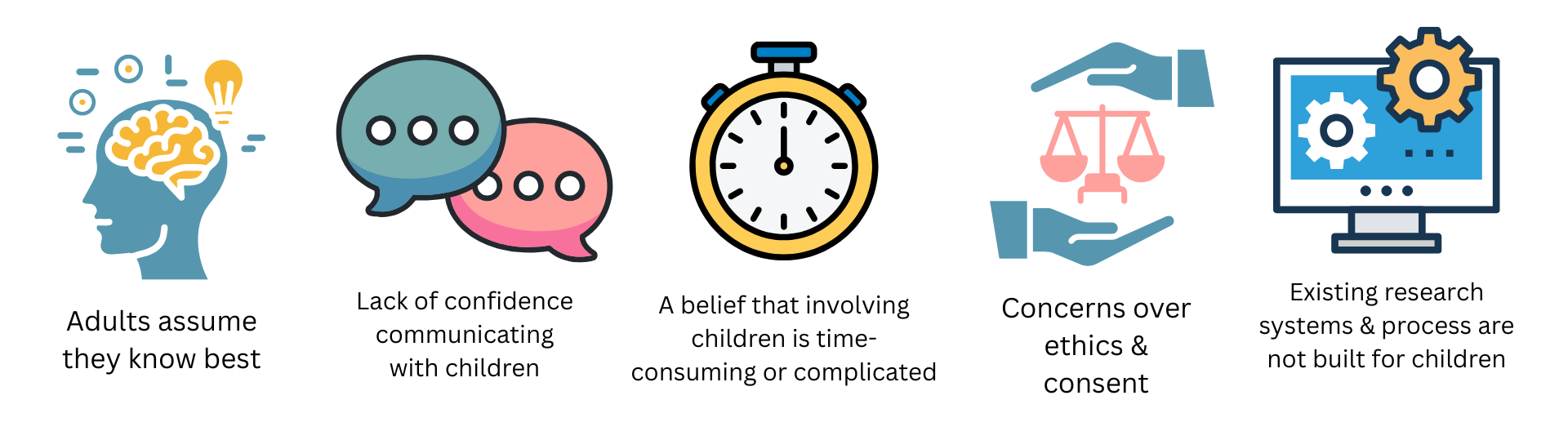
But why are children often excluded from research settings?
What barriers are there to overcome in including children & young people?
What are the benefits of children being involved in research?
Improves research quality, relevance, & applicability
Protects children’s right to be heard
Values diverse experiences & perspectives
The Leading By Example Project
There is currently no national framework for involving children in research.
In light of this, Leading By Example aimed to explore how best to integrate children & young people in the research process. To do so, researchers used the very method they sought to explore: child co-production.
But what does co-production mean?
Co-production is the equal partnership of multiple collaborators throughout the entirety of the research process. Essentially, for this project, this means that the researchers worked with adolescents and caregivers every step of the way – from concept development to presenting the research at a national conference.

Co-production group during one of the Leading By Example workshops
(from left to right): Jason, Clare, Matthew, Elise, Catriona, Martin
Consent to use this photo has been obtained.
What did this look like in practice?
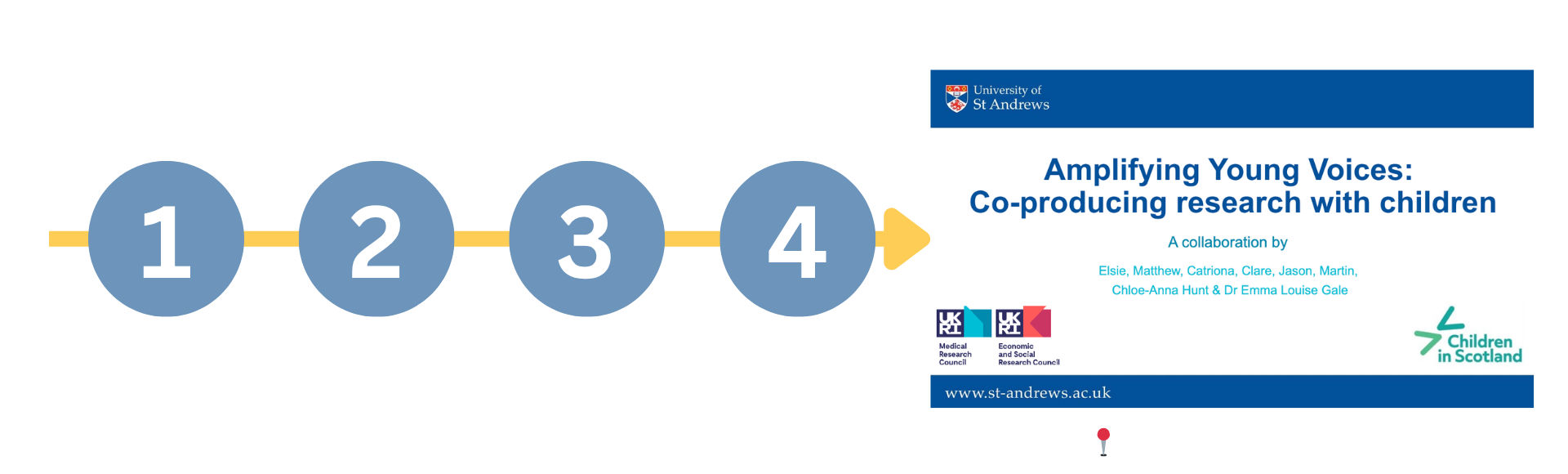
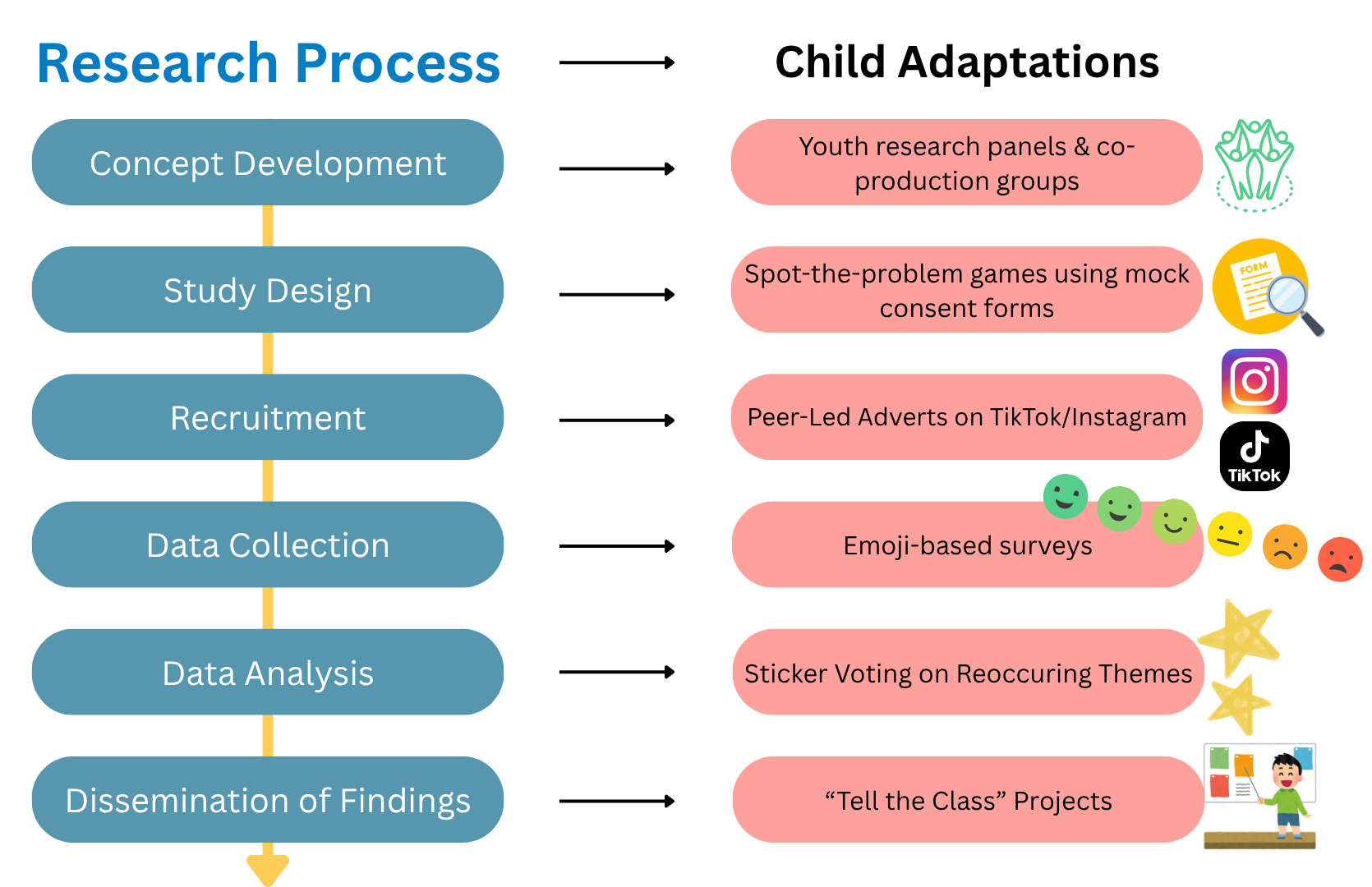
4 Co-Production workshops were held in which 3 caregivers and 3 adolescents worked with researchers to explore how each stage of research – including topic selection, study design, participant recruitment, data collection, analysis, and dissemination – can be adapted to suit children’s developmental stages.
Findings & Outcomes
The co-production team came up with several actionable suggestions to make each step of the research process more approachable to kids.
See some examples below!
Click here to access the full findings on our resources page!
Presenting the Findings
The research campaign was a resounding success with an oversubscribed presentation at the 2025 Children in Scotland Annual Conference in Glasgow.
Attendees attended the presentation
These attendees ranged from all sectors, including researchers, educators, clinicians, policy professionals, and charity workers from across Scotland and internationally

Dr Emma Louise Gale at the Child in Scotland Annual Conference.
Still Curious?
Access project materials & publications here…

… Or contact the research team for more information.

Emma Gale
Research Fellow in Child and Adolescent Sleep Health & Sleep Research Lead
Contact at: [email protected]

Funding
This programme was made possible through funding from the Economic & Social Research Council (ESRC) & Medical Research Council (MRC)

Page References
Hunt CA, Gale EL. Amplifying Young Voices: Co-producing research with children [conference presentation]. Presented at: Children in Scotland Annual Conference 2025; 2025 May 28–29; Glasgow, Scotland.