


News

New MRC-funded project on SpLDs and mental health

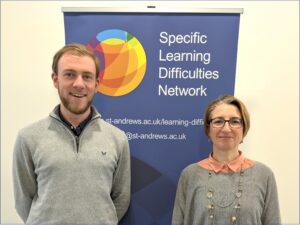
Prof Silvia Paracchini (University of St Andrews) has been awarded an MRC Impact Accelerator Award grant to support a new project in collaboration with Dyslexia Scotland and Dr Jeremy Law (University of Glasgow). Increasing evidence suggests that individuals with SpLDs, including dyslexia, dyscalculia, and dysgraphia, face higher risks of mental health challenges.
For example, the recent Dyslexia Scotland national survey, carried out in partnership with the University of Glasgow, reports that anxiety and depression rates are three to four times higher than in the general population. The project will investigate this link to identify common mental health challenges, barriers to support, and promising interventions reported by people with SpLDs and their families. In the short term, this project will help raise awareness around this important topic.
“We are thrilled to be part of this collaborative project, which will help to raise awareness about and generate further evidence about this important topic. We are looking forward to working on this partnership with the University of St Andrews as part of this partnership,” said Cathy Magee OBE, Chief Executive of Dyslexia Scotland.
The project is embedded in a longer-term vision aimed at generating evidence to inform policy and practice and improve support across education, health, and community settings.
“We are grateful to the MRC and the University of St Andrews for their support. This project is a direct outcome of the multidisciplinary, cross‑sector collaborations facilitated by the SLDN. We are also excited to strengthen our partnership with Dyslexia Scotland,” said Professor Silvia Paracchini.
The project will start in March and will be led by Dr Sam Warne (In the picture with Paracchini), research Fellow at the School of Medicine.
We look forward to seeing how the project develops and to sharing updates. Watch this space!
TES piece on SLDN’s research translation event

6 ways to improve interventions for specific learning difficulties
There is plenty of research around SLD – such as dyslexia, dyscalculia and dysgraphia – but teachers and schools need to be involved in developing new approaches.
There is no shortage of research, tools, products and services purporting to offer insight and solutions for teachers and learners dealing with specific learning difficulties. A motivated corps of experts, developers, entrepreneurs and others create ways to combat the difficulties and downstream disadvantages that come with SLD such as dyslexia, dyscalculia and dysgraphia, or combinations of these. How do they know what teachers and students need? How do they know where the gaps are, what makes existing interventions work and what might have changed since their previous tests or trials? And how do specialists and class teachers know what’s new “out there” or coming down the tracks? Or how to engage with the development of more up-to-date or effective edtech?
These questions were posed by a UK-wide event in March, held at the University of St Andrews and organised by the Specific Learning Difficulties Network, which brought together interests from across the SLD sector to examine how to improve the pathway from research and development to real-world results. Researchers, edtech entrepreneurs, specialist teachers and assessors, education authority officials and third-sector bodies assembled to hear case-study presentations from around the UK, and from a dozen edtech providers.
So what were some of the key messages about what needs to happen now?
- More pace
All parts of the sector want the pace of research and related interventions to increase.
- More participation
Academic researchers and commercial developers alike have trouble getting schools, teachers and local authorities to take part in research and user testing. Barriers such as workload, red tape or difficulties with “officialdom” prevent otherwise willing and interested schools and teachers from signing up to involvements that may bring benefits. SLD are also typically considered niche, so may have less profile than developments for “the mainstream”.
- Permission
Local authorities should empower and enable individual schools and teaching groups to work with research and new developments. Delegates’ view was that real-world testing of new products and the adoption of useful ones should be a priority.
Resistance to change has hampered progress, too. Normalising link-ups between researchers and schools could increase participation in research, promote more dynamism around new developments and expedite progress of effective improvements.
- Co-design
Making it easier for schools, teachers and learners to work with researchers would tackle the issue of the “user perspective” not being given enough attention in the design or delivery of new research and interventions. Researchers know the value of co-designing projects, and this also needs to be understood by officials and decision makers, to help them enable such collaboration.
- Quality standards
Some sort of official quality-assurance system should be created for interventions, so that users can be sure of the scientific or pedagogical basis for new tools and tech – a version of the National Institute for Health and Care Excellence (Nice) but for education.
- Collective problem-solving
High on delegates’ wish list was more cross-sectoral interaction, so that all parties involved in a problem get around a table and focus on the minutiae of what each role can do. Practitioners need to speak to policy people as a matter of course and to third-sector bodies that also are involved as sponsors or funders of new work. Having an open channel of communication with politicians who are motivated, well-informed and committed to progress rather than political point-scoring was also identified – this will be crucial to real improvement, in schools and beyond, where it matters most.
Gillian Stirton is research coordinator with the Specific Learning Difficulties Network, based at the University of St Andrews
[This is a transcript of an article published in TES on 16 April 2025 and is subject to TES copyright.]
Dyslexia Thailand seeks collaborators

SLDN has received an enquiry from Dyslexia Thailand via this website, keen to explore collaboration opportunities with European researchers from any relevant disciplines. Dyslexia Thailand works closely with Dyscalculia Thailand. Mr Somchoke Chartsiriwattana is the founder of Dyslexia Thailand, and the person seeking interaction with research colleagues in the UK and Europe.
Mr Chartsiriwattana and Dyslexia Thailand colleagues have spent more than 40 years researching and accumulating lived experience of dyslexia across a broad front. Dyslexia Thailand and Dyscalculia Thailand are keen to share knowledge and exchange information, ideas and experience with a view to developing joint research projects. The two organisations have offered use of longitudinal data and the involvement of academics and related professionals in any exploratory discussions. Areas of particular interest include ‘reasoning heuristics in sub-spectrums of dyscalculia’.
Mr Chartsiriwattana would welcome researchers’ questions on any aspect of dyslexia and dyscalculia practice, educational approaches or lived experiences in Thailand. If you would like to explore in more detail with him the type of collaboration sought, please email him.
Infographic highlights SLD Network’s activities to date
Infographic captures the activities and impacts of SLD Network so far
As we pass the milestone of two full years since SLDN was launched to the public, we’ve taken the opportunity to capture a snapshot of what the Network and its members have actually done and delivered in that time. Click on the thumbnail to the left of this text to see a larger version that will provide an overview of the events, papers, connections and contributions that have come out of SLDN so far. And we’re by no means done yet….Watch this space!
Equally, we are keen to hear how people around the sector think the SLD Network could add value to their activities, or to those of other people, projects or organisations in the sector. It’s all about connections and collaboration.
New paper illuminates research priorities from lived experience perspective

New paper illuminates research priorities from lived experience perspective
A new study by SLDN researchers has been published in Neurodiversity. It illuminates the lived experiences of people with dyslexia and other specific learning difficulties (SpLDs), revealing – in fact; confirming – significant challenges in identification, support, and mental health outcomes. The UK-based survey of 145 adults and carers of children with SpLDs including dyslexia (119 participants), dyscalculia (14), and dysgraphia (12).
The findings underscore the high co-occurrence of SpLDs with each other and with other neurodevelopmental traits such as ADHD and autism. Notably, 43% of respondents reported mental health issues, primarily anxiety and depression, with higher rates among those with multiple SpLDs. This highlights clearly the need for holistic support targeting both learning and emotional wellbeing.
Despite increased awareness, at least for dyslexia, half the respondents found the diagnostic process as difficult or very difficult, with no significant improvement across generations (comparing adults reporting on their own experiences and adults reporting on their child/young person). Support following diagnosis was also inconsistent, particularly for dyscalculia and dysgraphia. Generally, the findings highlight systemic gaps in identification and provision, especially outside of dyslexia, which remains the most recognised SpLD. Unsurprisingly, therefore, when asked about research priorities, identification and effective support were respondents’ top concerns. Those with dyscalculia also emphasized the need for greater public awareness and easier access to identification.
Survey respondents overwhelmingly supported framing SpLDs within the neurodiversity paradigm, and preferred terms like “learning difference” over “disorder.” Views on genetic testing for SpLD predisposition were mixed, however, and reflected both awareness and caution.
The research team advocates co-produced research involving people with lived experience to increase future studies’ relevance and impact. These findings will guide the next phase of SLDN’s work, including focus groups and priority-setting partnerships, to shape a more inclusive and evidence-informed research agenda.
You can find the full article here.
Meeting maps steps to quicker progress

Bridging the Gaps: How Collaboration and Technology Can Support Students with Specific Learning Difficulties
On 5th March, the Specific Learning Difficulties Network (SLDN) hosted an event at the University of St Andrews, bringing together innovators, academics, practitioners, local authorities, and government representatives. The SLDN, founded to foster collaboration across disciplines, aims to improve outcomes for individuals with specific learning difficulties (SpLDs), such as dyslexia, dyscalculia, and dysgraphia. The event served as a vital platform for participants to discuss the role of technology in supporting students with SpLDs in the classroom, while voicing barriers and proposing solutions. What made this gathering unique was its focus on facilitating dialogue between stakeholders who often operate in isolation. By creating a space for open conversation, the event highlighted three key themes: the potential of technology, the commitment of practitioners to supporting students, and the barriers that must be tackled.
The potential of technology
Technology offers immense opportunities to support children with SpLDs, from increasing accessibility to personalising learning experiences. Programmes like NELI (Nuffield Early Language Intervention) have demonstrated measurable success in improving language and literacy skills. Similarly, CALL Scotland provides practical, effective resources such as posters with clear guidelines for using assistive technology in classrooms. These tools empower both teachers and students, fostering more inclusive learning environments. However, realising the full potential of technology involves more than just providing tools—it requires thoughtful implementation. As Aimee Denholm, a primary school teacher, explained, ICT-assisted tools can give confidence to teachers, parents, and pupils, but only if sufficient training is provided. Without proper support, educators may mistrust or underuse these tools, leaving promising interventions underutilised.
The Commitment of Practitioners
Despite the challenges, the event underscored the strong commitment of practitioners to improving outcomes for students with SpLDs. Teachers, researchers, and local authorities showed enthusiasm for adopting new tools and interventions that can make a tangible difference in classrooms. As Fran Foreman, from Education Scotland, noted, “The sessions have shown how practical applications and linking to practice is in high demand, and the research is quite inspiring”. Yet enthusiasm alone is not enough to overcome systemic challenges. Participants identified several key barriers that prevent the effective adoption of technology and evidence-based interventions: lack of time, as teachers juggle multiple competing demands; limited resources, including funding and access to professional training; and lack of expertise, with many educators unsure how to interpret research or implement new tools effectively. These barriers are especially pronounced in settings where senior leadership buy-in is missing or professional development is underfunded. As one participant observed, “Research is often perceived as adding to teachers’ workloads, rather than helping them address existing challenges.”
Breaking Down Barriers Through Collaboration
A recurring theme throughout the event was the importance of collaboration and participatory design. By involving teachers, students, and parents in the development of tools and interventions, solutions can be tailored to meet real-world classroom needs. This approach not only increases the practicality and inclusivity of innovations but also fosters a sense of ownership among stakeholders, leading to more effective and sustainable implementation. Proposed solutions included increasing collaboration with third-sector organisations and cultivating local champions who can advocate for change and inspire their peers. One participant noted that “success happens where leadership from the top meets resilience from the bottom” highlighting the critical importance of communication and collaboration at every level of the education system. By bringing together diverse expertise, we can break down silos, address barriers, and ensure that technology and research are implemented in ways that are practical, sustainable, and equitable. By creating spaces for dialogue, we can ensure that all voices—whether from the classroom, the lab, or policymaking offices—are heard and valued. Ultimately, the event was a reminder that technology alone is not the solution. Its success depends on training, funding, and—most importantly—collaboration. Practitioners are eager to embrace innovation, but they cannot do it alone. By fostering communication and shared learning, we can ensure that all students, regardless of their learning difficulties, have the tools and support they need to thrive.
Industry meeting, 5 March 2025, St.Andrews

Education and Specific Learning Difficulties: Translating research into practice
Join us in St. Andrews, Scotland, on 5 March 2025 at a session to bring together people from the assistive technology sector, academics, users of SLD-focused tools and technologies and all interests in between. The event will get heads together from practice, research, policy and business to spotlight the processes though which educational technologies and tools are developed by academia and private companies, and how these innovations are adopted by education authorities a, practitioners and teachers. We will have expert facilitation for the day’s sessions to help move us towards actionable, practicable outcomes.
The programme has been designed to present the highest chance of productive outcomes, and has been co-produced with contributors and stakeholders. It will feature speakers from the frontlines of education and industry, and case studies spanning the policy and commercial sectors will present their unique perspectives and experiences. The exchange of ideas and insights gained on this day will not only enhance understanding of what aids or impedes the development and adoption processes, but will also help discover ways to deliver the right tools to the right users faster.
Attendees can explore a small exhibitor area, enjoy extended networking breaks , and participate in a focused workshop during the afternoon session. It will be a relatively small event with limited spaces available but if you’re keen to participate, drop us a line at [email protected] .
In-person Network meeting, 19 June, Guildford

Join us on 19 June in Guildford to hear what the SLD Network’s has been up to across its five working groups and its partnering and engagement activities.
Our meeting takes place at the University of Surrey on the afternoon prior to the British Dyslexia Association conference which many Network people will be attending. We hope to add value to members’ participation in that event by bringing as many as possible together to make and refresh connections, share updates on new and ongoing work, get heads together on potential partnerships and future collaboration and to report back on work that the Network has delivered or kicked off to date. There has been a lot going on and – as anticipated when SLDN was launched – myriad opportunities to align, interact, complement and augment work happening or in prospect in different parts of the SLD landscape.
The programme will feature – among other things – updates on ongoing SLDN activity, activity in small groups to facilitate information sharing and partnering, and general discussion across perspectives from different parts of the SLD sector, all with a view of producing the greatest amount of high-impact progress as possible on all fronts.
It’s a rare thing to be able to bring so many of our peers and colleagues together in person to re-establish and deepen connections so we hope that will encourage and motivate you to add this meeting to your plans for that week.
Registration will open on 21 March and invitations to sign up will be sent out to all Network members.
Informing SLDN research priorities with Lived Experience

The Specific Learning Difficulties Network was set up to accelerate and coordinate research efforts around the UK into dyslexia, dyscalculia and dysgraphia. In October, the project conducted workshops and interviews with people diagnosed with a specific learning difficulty to help prioritise areas of study. Specialist educators, parents, community leaders and people with SLDs provided their insights, and later their feedback, on particular research questions the SLDN can use to develop research plans and grants.
The two-phase, co-produced study collected stakeholders’ initial feedback, insights and lived experience across four established themes. This was shared with SLDN researchers, who then transformed the prioritised themes into research questions. These research questions were returned to stakeholders to gain final feedback and embed the co-productive and iterative approach.
Stakeholders’ top research priority is understanding the knowledge and skills education professionals require to identify early signs of learning difficulties and provide optimal support for people affected. This includes work to understand and optimise educational interventions and environments at each age and stage, helping those with SLDs achieve the best possible outcomes.
An interesting view from consultees was that examining non-academic interests and hobbies that children with SLD tend to like could aid understanding of the conditions and, in turn, how to mitigate and overcome their negative impacts.
The effectiveness/efficacy of technologies and apps for dyslexia or dyscalculia is another area that stakeholders feel merits urgent study. This includes how technologies can best be designed and applied to help people overcome their difficulties. For example, what makes the MONZO app easier to use than the HSBC app for dyscalculics?
Dyscalculia is significantly less recognised and accommodated than dyslexia despite it affecting around one in fifteen people (6%). Dyscalculics and others said work was needed to examine the daily difficulties dyscalculics face and the impacts on life skills and concerns like financial literacy and exposure to financial abuse.
Lastly, investigating the types of employment people with SLDs go into and the barriers that exist across the spectrum of work types and roles could yield insight into the impacts, strengths and areas of potential or difficulty associated with the conditions.
This co-produced list of research questions will be used to guide research plans and funding applications over the next few years.
This short video gives a flavour of the network’s first public event on 16 June at the Royal Society of Edinburgh. Like the event itself, the video introduces SLDN’s work to raise awareness of dyslexia and dyscalculia.
As well as a focus group session for teachers, the day featured an exhibition area showcasing different organisations including Dyslexia Scotland and CALL Scotland, giving attendees an opportunity to ask questions, learn about current work around Scotland, and to network. Prof Brian Butterworth (UCL) then delivered a fascinating talk on recent developments in the science of dyscalculia which was a revelation to much of the audience. A short panel discussion closed the event, with perspectives from Education Scotland and inspiring contributions from two Young Ambassadors from Dyslexia Scotland.
A video of the full lecture and panel discussion is available here.