


Working Groups

The Network has defined five areas of particular practical interest for research and collaboration and has set up a Working Group of relevant experts to deliver activity and contributions in these areas. A research prioritisation exercise was carried out in Aug/Sept 2023 within the SLDN network generally to identify potential research questions to be taken forward with most urgency by the working groups.
The working groups will provide updates on progress and current activity as time goes on. The five Groups are:

Setting Research Priorities

The work of this group is to generate research questions for academic investigation by working in close collaboration with stakeholders and people with lived experience to reflect areas and issues of priority, concern and opportunity.
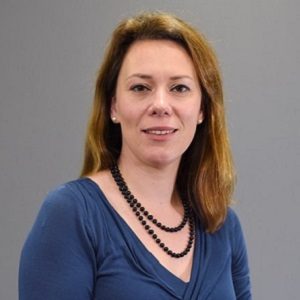

Working Group leads: Jo van Herwegen and Sinead Rhodes
Prof Jo van Herwegen’s research focuses mainly on language and number development in both typical and atypical developmental disorders, such as Williams syndrome, Autism Spectrum Disorders, Down syndrome, and Specific Language Impairment. Linking the aforementioned areas of research activity, I am interested in individual differences, as well as exploring what cognitive abilities and strategies relate to successful performance in typical populations and how these differ in atypical populations, to aid the development of economically-valid training programmes. Jo uses a range of methods and experimental designs, including spontaneous language samples, preferential looking, experimental tasks, and eye tracking and studies abilities from infancy onwards to obtain a better understanding of how cognitive abilities develop over time and how performance across different cognitive areas relate to each other. supervision of school leaders.
Sinéad is a developmental psychologist who is interested in the cognitive factors underlying behaviour and learning. Her research has principally focused on cognition, especially memory and associated executive functions, in children with neurodevelopmental disorders, including ADHD, ASD and Williams syndrome. She also examines cognitive factors underlying mental health especially depression and anxiety, and is particularly interested in cognition and depression within the context of neurodevelopmental disorders. Sinéad is extensively involved in public engagement activities: she is the founder of the Research the Headlines project and was awarded the 2017 Royal Society of Edinburgh Innovators Public Engagement Prize. Sinead is an Emeritus member of the Young Academy of Scotland.

Terminology
This working group will map definitions in use to identify similarities and differences. The overarching aim is to agree on definitions that are most appropriate and useful for research and practice.
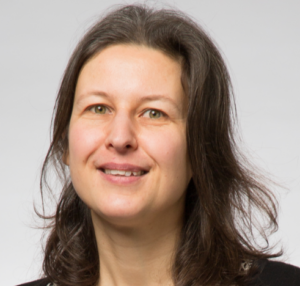
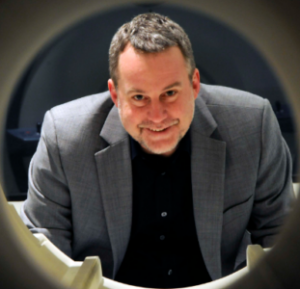
Working Group leads: Kinga Morsanyi & Joel Talcott
Dr Morsanyi is a psychologist by training, and lectures on Mathematical Cognition at Loughborough University. Her main focus is on mathematics learning, but her research interests also encompass reasoning and decision-making, the motivational and emotional aspects of learning, and educational approaches to improving thinking skills. Kinga also researches the atypical development of cognitive skills, in autism and in developmental dyscalculia.
Prof Talcott researches on Dyslexia (reading disability), Cognitive psychology, Reading, Developmental psychology and Audiology. The concepts of his Cognitive psychology study are interwoven with issues in Longitudinal study, Repetition, Visual perception, Phonological awareness and Stimulus–response model. His Reading research incorporates elements of Cognitive skill, Sensory processing, Sensory system, Psychophysics and Phonology, integrating issues of Stimulus, Perception and Developmental dyslexia in his study of Audiology. His Dyslexia research incorporates themes from Developmental psychology, Language disorder and Cerebellum. His work focuses on many connections between Cognitive psychology and other disciplines, such as Visual perception, that overlap with his field of interest in Stimulus, Sensory threshold and Psychophysics. His primary area of study in Reading is in the field of Reading disability.

Improving Education Resources
This group will explore four nations differences and consider how theory translates to practice. Its remit is to create decision-free tools to help teachers identify dyslexia and dyscalculia more readily and determine appropriate interventions to mitigate the impacts of SpLDs.
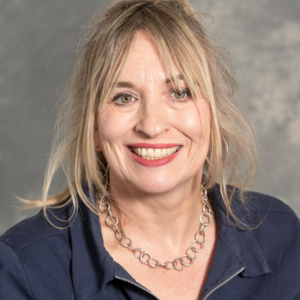

Working Group leads: Elisabeth Herbert & Emma Sumner
Liz spent over twenty years as a teacher and taught in both mainstream and special school settings; with primary and secondary age ranges. Following her experience in schools she was employed as an SEN/EMAS coordinator in special schools. She spent over 10 years as a local authority Senior Advisory leader for language and literacy, developing specialisms in both of these areas and strategically supporting schools and pupils. She is UCL IOE Programme Director for MA SpLD dyslexia and Programme route leader for the MA in Special and Inclusive Education Specific Learning Difficulties route and a Lecturer in department of psychology and human development. Liz’s research interests include literacy difficulties, Edtech, dyslexia. KE project facilitator- PALAC, MITA, spelling, experiences of children in care, supervision of school leaders.
Dr Emma Sumner is a Senior Lecturer in Psychology at Edge Hill University. Her research focuses on language and literacy development, with a particular interest in why children and young people experience difficulties with oral and written language and the support processes in place in schools. She has studied the profiles of children and young people with dyslexia, developmental coordination disorder, and autism. More recently, she has been investigating how students with specific learning difficulties are identified for exam access arrangements and the efficacy around these interventions. An important aspect of this work has been to develop an audit tool that schools can use to enhance their exam provision. In this sense, her research has an applied focus and she is passionate about bridging the research-to-practice gap.

Mapping Available Data Cohorts
High quality data from large samples are a key resource to address important research questions around, for example, the identification or risk factors or the effectiveness of intervention studies for specific learning difficulties. Our working group is conducting a mapping exercise to catalogue existing cohorts and to describe and associate each with relevant measures and criteria. Doing this will help us identify which datasets are most relevant to current research projects and will inform decisions around the need for novel dedicated resources, such as the creation of a new dataset.
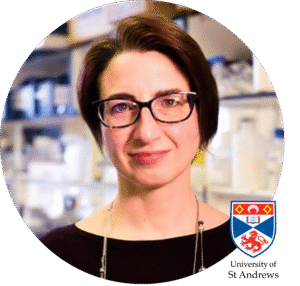
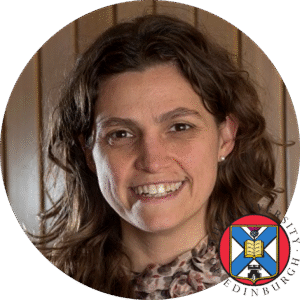
Working Group leads: Silvia Paracchini & Michelle Luciano
Prof Paracchini graduated in Biological Sciences (cum laude) from the University of Pavia in 1998 and obtained a DPhil in Human Genetics from Oxford University in 2003. She conducted her post-doctoral training in Prof. Anthony Monaco’s group at the Wellcome Trust Centre for Human Genetics, Oxford University, where she became interested in dyslexia genetics. In 2011, she was awarded a Royal Society University Research Fellowship to set up her group at The University of St Andrews where she continues to investigates the genetics of specific learning difficulties and cognitive abilities. In 2013, she became member of the Young Academy of Scotland and then was elected Fellow of the Royal Society of Biology (FRSB; 2018) and Fellow of the Royal Society of Edinburgh (FRSE; 2019). In 2024 she was appointed as Professor of Neurodevelopmental Genomics at the University of Bonn.
Prof Luciano is a Reader in Psychology at the University of Edinburgh. Her research focuses on the genetic and environmental aetiology underlying human development and behaviour. One of her main research interests is to understand what causes the variation between people in how well they read and use language. And to do this, she uses behavioural genetic research methods. This includes twin and extended pedigree designs, molecular genetic techniques, epigenetic, and gene x environment interaction modelling. She has most recently led an international collaboration which has discovered significant genes associated with dyslexia.

Technology
The aim of this group is to help people make the most of technology. In particular, it will examine how machine learning, multi-dimensional analysis, and open-source tools may be able to aid our research and open new avenues to overcome challenges arising from SpLDs both for those with lived experience and for people interacting with them.
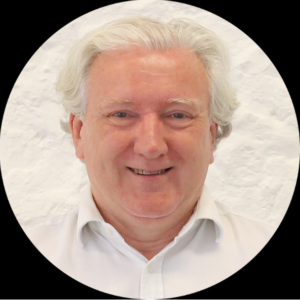
Working Group lead: Pete Jarrett
Pete is MD of Tutorum Technologies, a start-up focusing on education and neurodiversity support. Intelligent data flows to support human interactions form the core of Tutorum’s work, including in its mobile first, data light platform that supports financial, business, numerical and digital literacy learning. Tutorum is currently building a platform to support neurodiverse people in work and education. Pete also offers consultancy around education, neurodiversity and maths learning and is passionate about supporting people who struggle with mathematics, numeracy and learning. As a dyslexic with ADD he appreciates how difficult life can be in an education system with little tolerance for individual difference. To help understand better what makes learning difficult for an individual, after many years in the classroom, Pete chairs the BDA Dyscalculia and maths learning difficulties Committee, sits on several working groups, boards and committees and is Vice-Chair of Governors at a local special school., supervision of school leaders.

Research support
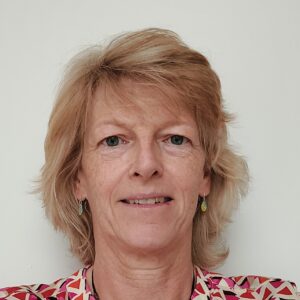
Research Coordinator: Gillian Stirton
Gillian is Research Coordinator for the Network, working part time and typically be in the office on Thursdays and Fridays. Gillian’s professional background is in communications, project management and publishing. Prior to joining the University, she spent nine years at agri-environmental research organisation the James Hutton Institute, near Dundee, ultimately as Head of Communications from 2017, leading the team promoting the Institute’s work and building its public profile.