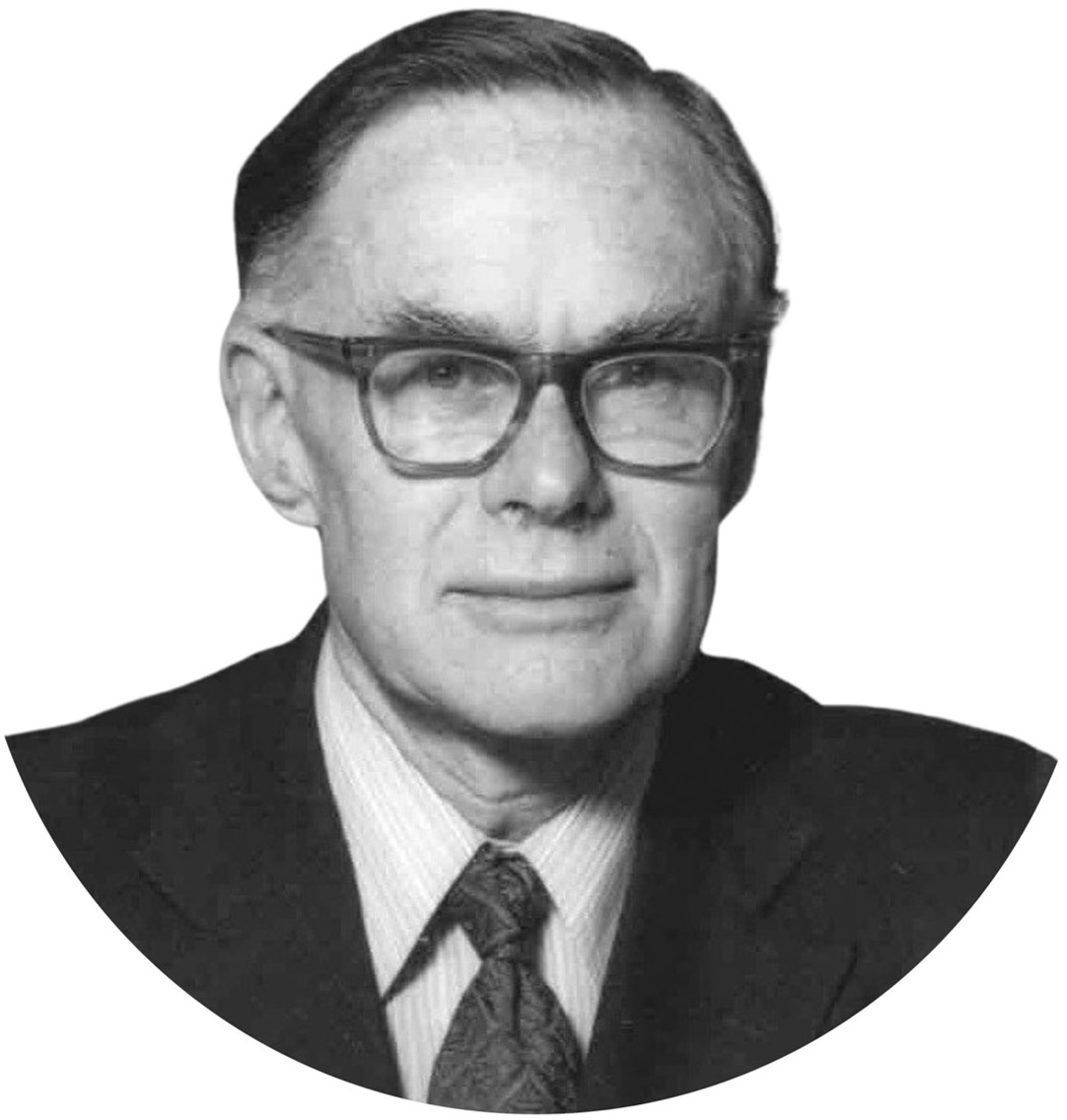
John Forfar
Born in Glasgow, Forfar graduated from St Andrews with an MBChB in 1941 and an MD in 1958.
Medicine in the Royal Army Medical Corps
Forfar joined the medical service during World War II. He served in the Royal Army Medical Corps, seeing active service in France with 47 Commando. He participated in the D-Day Landings and the recapture of Port-en-Bessin in June 1944. Forfar was awarded a Military Cross for valour in the recapture of Walcheren in November 1944. He had attended the wounded on the sandy dunes under heavy mortar fire, rescuing his troop commander, who had sustained a gunshot wound through his eye.
In the painting by Leslie Cole, located on the top floor of this building, a bespectacled Forfar (centre-back) provides first aid in the village of Sallenelles, Normandy, in July 1944, during the battle for Caen.
Paediatrics and child health
After the war, Forfar specialised in paediatric medicine. He trained at Great Ormond Street Hospital in London, obtaining a Diploma in Child Health (1948). He was appointed to positions at St Andrews, Dundee, and Edinburgh, where he became the Edward Clark Chair as Professor of Child Life & Health in 1964.
Forfar sought greater recognition of paediatric medicine and advocated for more advanced subspecialisation.
He published prolifically on clinical practice and research. He studied a variety of conditions, ranging from neonatal infections and pharmacology to nutrition and metabolic disorders.
Forfar helped establish the Royal College of Paediatrics and Child Health in 1996.
John Forfar was a pioneering paediatrician, committed to improving child health. Both in his research and practice, he advanced paediatric medicine on the national stage.