
Study 1: Decision support in addiction: The development of an e-health tool to assess and prevent risk of fatal overdose. The ORION Project
Background and objective
The application of e-health technology to the field of substance use disorders is at a relatively early stage, and methodological quality is still variable. Few have explored the extent of utilization of communication technology in exploring risk perception by patients enrolled in substance abuse services.
The Overdose RIsk InfOrmatioN (ORION) project is a European Commission funded programme, aimed to develop and pilot an e-health psycho-educational tool to provide information to drug using individuals about the risks of suffering a drug overdose.
Methods
In this article, we report on phase 1 (risk estimation), phase 2 (design), and phase 3 (feasibility) of the ORION project.
Results
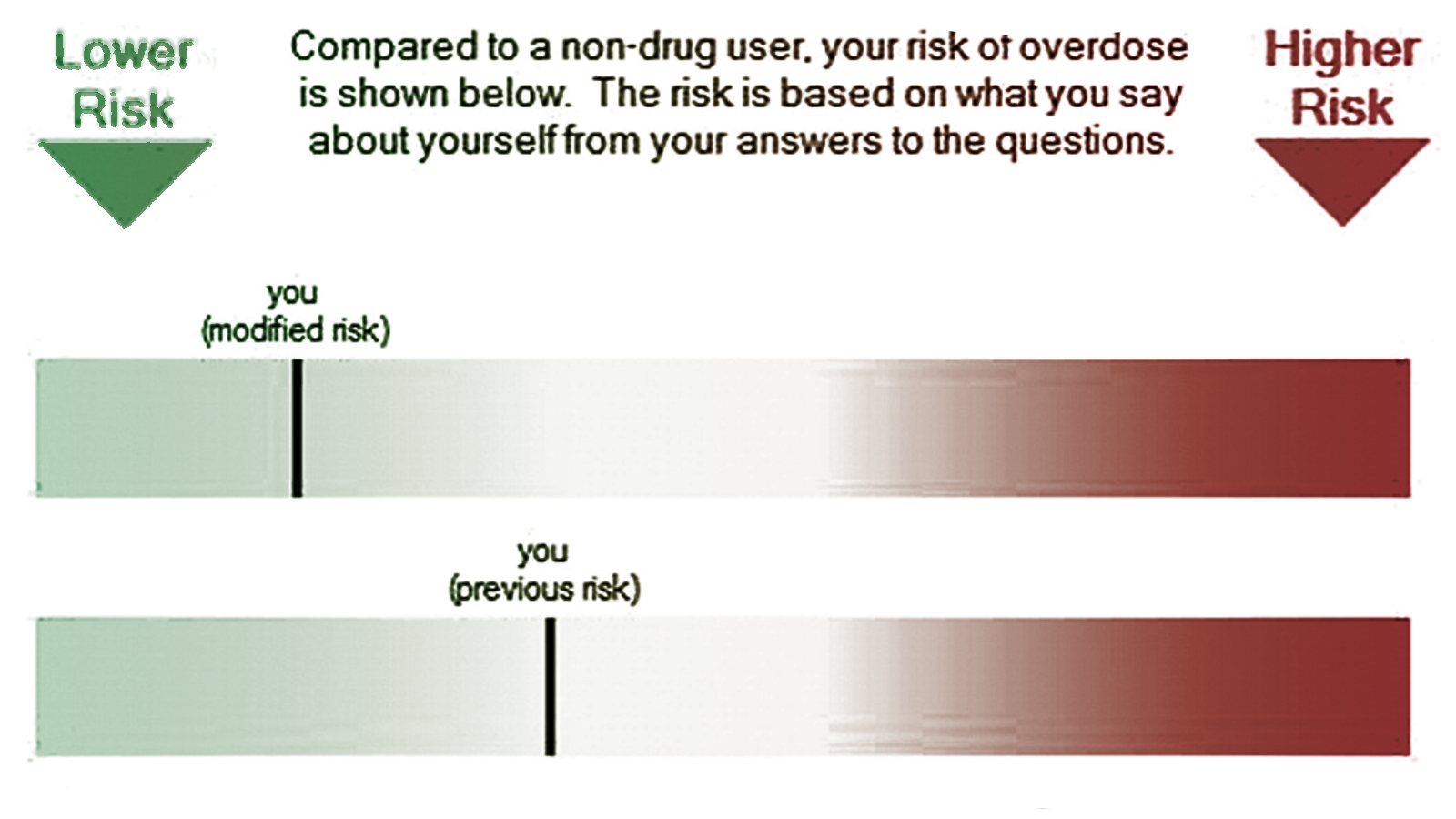
The development of ORION e-health tool underlined the importance of an evidence-based intervention aimed in obtaining reliable evaluation of risk. The ORION tool supported a decision making process aimed at influencing the substance users’ self-efficacy and the degree to which the substance users’ understand risk factors. Therefore, its innovative power consisted in translating risks combination into a clear estimation for the user who will then appear more likely to be interested in his/her risk perception.
Conclusion
Exploratory field testing and validation confirmed the next stage of evaluation, namely, collection of routine patient samples in study clinics. The associations between risk perception of overdose, engagement with the ORION tool and willingness to alter overdose risk factors, in a clinical setting across various EU member states will further confirm the ORION tool’s generalisability and effectiveness.
Study 2: Engagement in the Overdose RIsk InfOrmatioN (ORION) e-Health Tool for Opioid Overdose Prevention and Self-Efficacy: A Preliminary Study
Increasing awareness of, and information about, overdose risk is an appropriate approach in risk reduction. e-Health technology in substance use disorders is an opportunity to support behavioural changes related to public health concerns. The present study aimed to evaluate the short-term impact of an innovative e-health psychoeducational software, the Overdose RIsk InfOrmatioN (ORION) tool.
The ORION programme provided relevant information to opioid-dependent individuals about the risk of suffering a drug overdose as a result of high risky and dysfunctional behaviors. Seven aggregate risk factors were identified through a systematic review and their outputs included in a risk estimation model. We recruited 194 opioid-dependent treatment-seeking individuals from the United Kingdom, Germany, Italy, and Denmark. All participants were given at study entry, and after their use of the software, the General Self-Efficacy (GSE) Scale.
We found comparable pre- and post-ORION administration mean GSE scores (SD), 28.49 (5.50) and 28.32 (5.90), respectively (p = 0.297). However, there was an inverse correlation between the number of risk factors and reported levels of self-efficacy (p < 0.001). ORION was able to identify individuals who are most in need of reducing their modifiable risk factors with appropriate interventions. However, a one-shot e-health tool cannot influence complex domains such as self-efficacy unless this is used with other effective interventions.
The ORION tool is unique in its style and content of delivery, that is translating risks combination into a clear estimation, and will need further development such as (a) integration in smartphone-based e-health apps and (b) testing in other high-risk populations.
Study 3: Engagement in an e-Health Tool (ORION) predicts opioid-dependent patient likelihood of behavioural change
Background
An eHealth computer-based tool named ORION was constructed to assist patients in the clinic to appreciate the factors responsible for risks of drug overdose. The aim of this study was to investigate the associations between risk perception of overdose, engagement in the ORION tool and willingness to alter overdose risk factors.
Methods
194 opioid dependent patients participated from 4 countries (UK, N=39; Germany, N=99; Italy, N=40 and Denmark, N=16).A structural equation model was fitted (AMOS version 17) to summarise the predicted associations between perceived risk and willingness to change risks of opioid overdose. The degree of engagement with the tool (time spent and number of changes to overdose risk factors) was explored.
Results
A variety of models were fitted and the most parsimonious model provided a non-significant difference between the raw data and the specified model: Chi Sq = 16.87, df10, p = .077chi sq/df = 1.688. The fit indices: CFI = .991, RMSEA = .066. Pre and post self-assessments of risk towards known factors linked with overdose were highly correlated. A significant path was found between engagement in the tool and the willingness to change one or more risk factors (stand. coeff. = 0.16, p = .04). In addition, the final assessment of the risk factors was associated with engagement (stand. coeff. = 0.18, p = .02).
Conclusion
The encouragement of drug users to engage in exploring changes to their overdose risk when presented on a computer screen appears to increase willingness to change risky behaviour.
Outputs
Baldacchino AM, Crocamo C, Humphris G, Neufeind J, Frisher M, Scherbaum N, Carrà G. (2016) Decision support in addiction: The development of an e-health tool to assess and prevent risk of fatal overdose. The ORION Project Comput Methods Programs Biomed 2016 Sep;133:207-216. doi: 10.1016/j.cmpb.2016.05.018
Carrà G, Crocamo C, Humphris G, Tabacchi T, Bartoli F, Neufeind J, Scherbaum N, Baldacchino AM. (2017) Engagement in the Overdose RIsk InfOrmatioN (ORION) e-Health Tool for Opioid Overdose Prevention and Self-Efficacy: A Preliminary Study. Cyberpsychol Behav Soc Netw. Dec;20(12):762-768. doi: 10.1089/cyber.2016.0744
Humphris, GM, Carra, G, Frisher, M, Neufeind, J , Cecil, JE, Scherbaum, N, Crome, I, Baldacchino, AM (2017) Engagement in an e-Health Tool (ORION) predicts opioid-dependent patient likelihood of behavioural change Heroin Addiction and Related Clinical Problems 19(5)