

Despite the existence of evidence-based treatments, a significant treatment gaps persists for many people with opioid use disorder (OUD). A 2023 global systematic review of interventions to mitigate against drug deaths found that only around 18-22 % of people injecting opioids were receiving medications for opioid use disorder (MOUD) and this treatment gap is widest in Africa, Asia, and rural settings in other regions. Telemedicine for MOUD (TMOUD) offers potential to reduce barriers to access and address the opioid addiction treatment gap. However most evidence on TMOUD focusses on the English-speaking world and high income countries, typically the US and Europe.
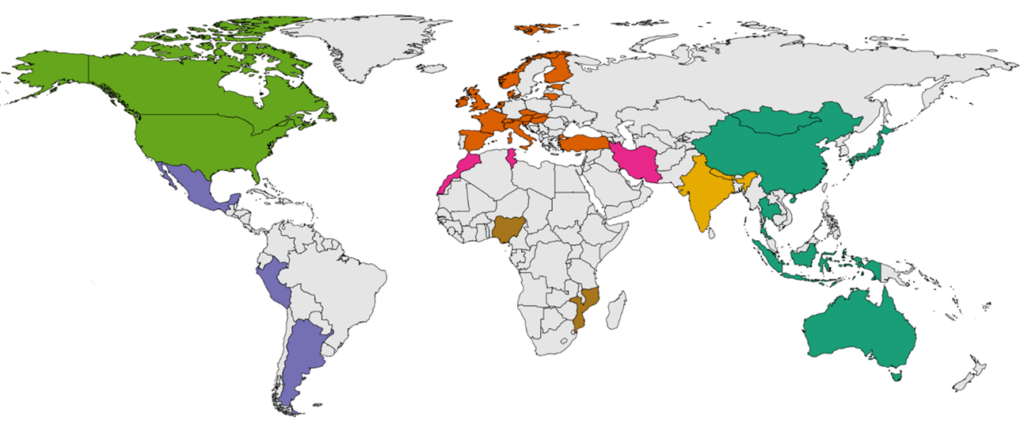
In partnership with the International Society of Addiction Medicine’s Global Experts Network, DigitAS staff conducted the first global survey of addiction medicine experts to characterise TMOUD implementation, identifying key barriers and facilitators across diverse economic contexts. Our findings reveal that while TMOUD uptake surged during the COVID-19 pandemic, access remains inequitable, particularly in low and middle income countries (LMIC). Key barriers include restrictive policies on prescribing OUD medications, inadequate reimbursement mechanisms for remote consultations, outdated clinical guidance, and insufficient digital infrastructure. Clinician training and experience also emerge as critical gaps, disproportionately affecting LMIC settings. This study provides a foundational understanding of the systemic challenges to TMOUD expansion and underscores the need for tailored policy and infrastructural solutions to address these disparities.
Output
Schofield, J., Baldacchino, AM., Ambekar, A., Anaba, H., Butner, JL., Day, N., Ekhtiari, H., Elomari, F., Ferri, M., Kokkolis, K., Kouimtsidis, C., Levola, J., Long, J., Martell, D., Parker, D.G., Rahimi-Movaghar, A., Kurniasanti, KS., Steiger, S., Khojasteh ZA., Teck, JTW. Global Perspectives on Telemedicine-Enabled Medication for Opioid Use Disorder: Practices, Priorities, and Barriers. 2026;0(0). DOI: https://doi.org/10.1177/1357633X251394442